
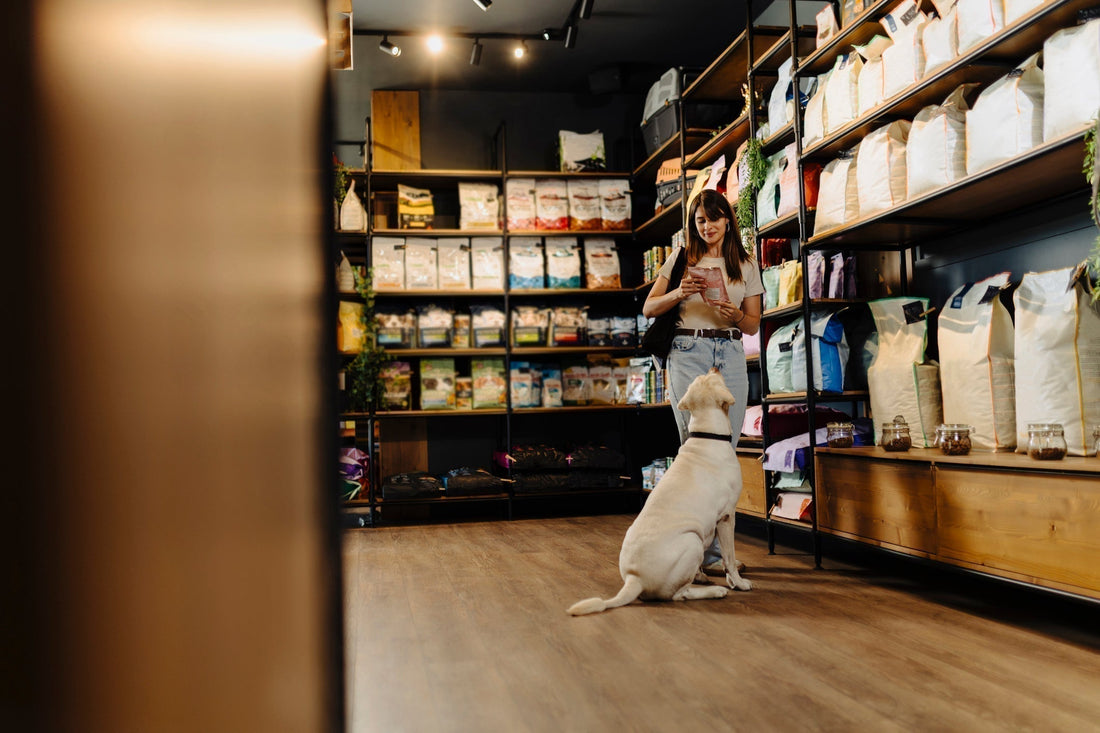
How to Skim a Dog Food or Treat Label in 30 seconds
- The first three ingredients: They make up the majority of the food or treat. You want named animal proteins such as Beef, Chicken, or Turkey, not vague terms like "meat by-products" or "animal digest."
- Watch for ingredient splitting: Corn flour, corn gluten, and corn syrup are three separate, corn-derived ingredients, not one ingredient listed three times. Notice how many ingredients are in the food, excluding vitamins and minerals, before deciding how much of any one source is really in the recipe.
- Glycerin in dog treats: Often added to jerky treats to retain moisture and add weight. Look for naturally dried dog treats that use low-heat dehydration instead.
- The AAFCO statement: A complete dog food nutrition label should confirm the food is "complete and balanced" for your dog's life stage. This nutritional adequacy statement is the closest equivalent to the Nutrition Facts panel found on human food and is required under AAFCO guidelines.
- Human grade means the facility too: On a human-grade dog food label, it is not just about the ingredients.
How to Read a Dog Food or Dog Treat Label
Reading a dog food or dog treat label means checking the ingredient list and any label claims on the back of the package. That is where the real information lives, but it takes a little decoding to use it well. The same applies to dog treat labels, where ingredient quality can vary just as widely.
According to FDA animal food labeling regulations, the dog food nutrition label must list ingredients in descending order by weight before processing.
Named Proteins Versus Generic Terms on a Dog Food Label
A named protein on a dog food label, such as Chicken, Beef, or Turkey, tells you exactly what animal it came from. A generic term like "meat meal" or "animal protein" does not. That specificity also makes it easier to spot when a formula changes from bag to bag. The AAFCO reading labels guide specifies that all ingredients must be listed by their AAFCO-established names so consumers can compare products objectively.
How Ingredient Splitting Works on a Dog Treat Label
Ingredients are ordered by weight before cooking, starting with the heaviest, and listed in descending order. It can be hard for consumers to know how much of an ingredient is actually in the product simply by looking at a pet food ingredient list.
A product might include corn flour, corn gluten, and corn syrup as three separate line items. Individually, each looks minor, but combined they may outweigh the protein listed first. When reading a pet food ingredient list, if you see the same base ingredient appearing more than once in different forms, it is worth adding them up before making a decision.
Reading Between the Lines of a Dog Food Label
Signals Worth Noting
- Whole protein first (Chicken, Beef, Turkey)
- Ingredients you could find in a grocery store
- Mixed Tocopherols, a natural preservative
- AAFCO nutritional adequacy statement on the label
- Human-grade ingredients made in an FDA-inspected human food facility
Questions Worth Asking
- Generic "meat" or "animal protein" with no named source
- Multiple forms of the same ingredient listed in a row
- By-product meals with no named animal source
- Artificial preservatives (BHA, BHT, ethoxyquin)
- Vague terms like "animal digest" or "poultry by-product"
- Glycerin in soft treats, which adds moisture weight rather than nutrition
What the Dog Food Label Cannot Tell You
Reading a dog food ingredient list tells you what is in the food. It does not tell you how the food was made or what standards the facility was held to, and that is the part most brands do not talk about.
Dog food is legally classified and regulated as animal feed, not human food, regardless of ingredient quality. As the FDA notes on its animal health page, it does not review or approve the final packaged formulation of dog food before a company markets it. What varies from brand to brand is the facility: a product can carry a premium-sounding label while being manufactured in a facility that meets feed-grade standards, which involve less oversight than those of a facility also registered to produce food for humans.
What Does Human Grade Mean on a Dog Food Label?
AAFCO has published specific guidelines for when a dog food or treat label can use the term "human grade." It is not a feeling or a marketing phrase. Both of the following conditions must be satisfied at the same time.
Every ingredient in the dog food or treat must be fit for human consumption under USDA and FDA standards.
The food must be manufactured in a facility registered as both an FDA animal food facility and an FDA human food facility.
Both conditions must be true at the same time. Dog food can use high-quality ingredients and still not qualify as human-grade if it is made in a facility operating under feed-grade rules. Some products that use the phrase on their label sit in exactly that gap: real ingredients, pet food facility.
How Full Moon Pet Approaches This Standard
Ingredients and facility standards, together.
Full Moon was created to close the gap between a clean ingredient list and a high-quality human-grade facility. Every product is made in a USDA-inspected kitchen that is also registered to produce food for humans, and the dog food and treat labels are short because they are meant to be read without causing confusion. What is on the label matches what is in the bag.
See Our Commitment to QualitySourcing and Safety Record
Full Moon Pet has had no FDA or voluntary recalls since its founding in 2011. That record is the direct result of strict quality control procedures in USDA-inspected, GFSI-certified human food kitchens with strict temperature controls and third-party audits at every stage of production. All protein is sourced from family farms in the USA, and poultry for the Freshly Crafted frozen line comes from Perdue Family Farms, where animals are raised without antibiotics.
When evaluating any brand, the FDA maintains searchable records of animal food recalls by brand name. A clean history since founding, combined with GFSI-certified facility audits, reflects the higher standard of care. Full Moon Pet kitchens are held to this standard from the first ingredient to the last.
Full Moon founded by Ryan Perdue
Treats donated to shelters and rescues
FDA or voluntary recalls in Full Moon history
The Ingredients We Build Around
Each ingredient contributes to the overall dog food nutrition profile, and nothing is included to add bulk or lower cost. This is what to look for on a dog food or dog treat label when the standard matters. Here is a sample of what you might find on a Full Moon label, and why it is there.
Chicken, Beef, and Turkey: Whole muscle protein from family farms in the USA. Amino acids that help support muscle health.
Salmon Oil and Flaxseed: Dual Omega-3 sources supporting skin and coat health. Flaxseed also provides soluble fiber for digestive health.
Bone Broth: Made with natural collagen. Adds moisture and flavor.
Blueberries and Sweet Potato: Wholesome fruits and veggies. Provides natural, slow-burning energy without starchy fillers.
Turmeric: Included for natural flavor. Gives treats a taste dogs love.
Rosemary Extract: Added as a natural flavor. Keeps the dog treat label short and recognizable.
If you have questions about any specific ingredient, its sourcing, or how Full Moon's kitchens operate, our commitment page covers the full picture. The team is also available at consumerinfo@fullmoonpet.com or 1-888-970-3855.
The Bottom Line on Spotting a Quality Dog Food or Treat
Reading dog food labels does not require expertise. Starting with the first three ingredients on the dog food nutrition label and watching for splitting across the pet food ingredient list will get you most of the way there. The question the dog food nutrition facts panel cannot answer on its own is where the food was made and to what standard. A clean dog food label backed by a USDA-inspected, human-grade facility and a clean recall history tells you more than ingredients alone, and that combination is worth looking for the next time you are comparing products at the store.
See what goes into every Full Moon recipe.
Human-grade ingredients. Family farms in the USA. Zero recalls since 2011.
Up next:
Unleash Your Dog's Potential
Similar Reads




Build your pup's perfect meal
Healthy pets start with healthy food. Let's find out what meal plan will work best for your dog!
Take The Quiz