
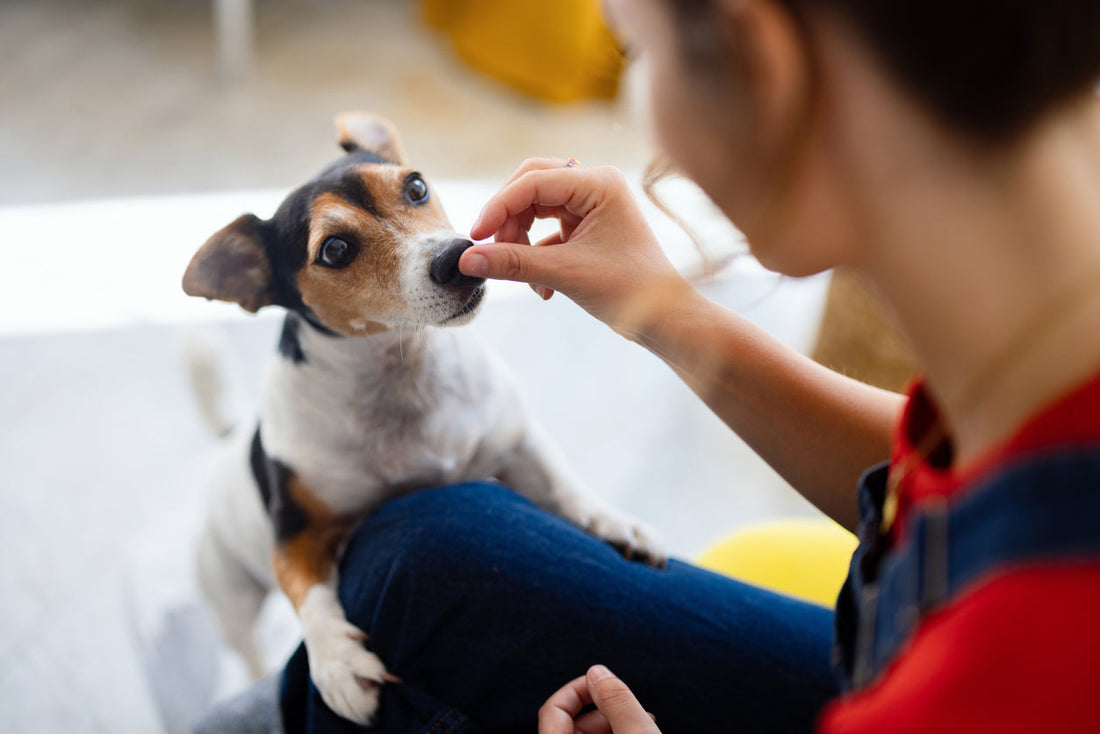
Why Dental Disease in Dogs Often Goes Unnoticed
Dogs evolved to conceal signs of weakness, so dog tooth pain rarely shows up as obvious whimpering or crying. What it does show up as is a quiet shift in behavior. A dog who's always been enthusiastic about treats starts sniffing them and walking away. A dog who used to finish every meal in under two minutes starts leaving food in the bowl.
According to the AVMA, most dogs show some evidence of periodontal disease by age three, and it typically worsens with age without preventive care. The AKC notes that early-stage plaque forms below the gumline, where it isn't visible during a routine home check. That's a big part of why dental disease in dogs is so commonly missed until a vet points it out.
For a lot of dog owners, the signal doesn't come from watching for symptoms at all. It comes from a vet visit. A checkup turns up gum disease, or a diagnosis of periodontal disease, and suddenly it makes sense why a dog has been quieter around treats lately. That's a common reason people come to Full Moon Pet in the first place, not to self-diagnose anything, but because they already know, and they just need something their dog can actually chew.

5 Subtle Signs Your Dog May Have Dental Disease
-
1
Suddenly turning down familiar treats
A dog who's reliably taken the same treat for months and now walks away is telling you something has changed. Dogs managing tooth or gum sensitivity will often decline hard or chewy treats while still accepting something soft, which makes this one of the most reliable early signs owners can catch.
-
2
Letting food fall from the mouth
Picking up food and dropping it right away isn't clumsiness. It's often a dog repositioning it away from a painful spot, or letting go the moment biting down triggers discomfort. Eating more slowly than usual, or favoring the front teeth over the back molars, tends to point to the same cause.
-
3
Favoring one side when chewing
A healthy dog chews both sides of the jaw interchangeably. When one side hurts, they shift all chewing activity to the other. Watch for a consistent head tilt while eating, or uneven wear on chew toys over time.
-
4
A noticeable change in breath odor
Some degree of dog breath is normal, but a sharp shift in intensity or a distinctly foul smell is worth paying attention to. It usually reflects bacterial buildup along the gumline, a hallmark of advancing periodontal disease, and calls for a vet visit rather than a quick fix at home. Our guide on how to get rid of bad dog breath naturally covers the gut-and-diet side of this in more depth.
-
5
Rubbing the face or pawing at the mouth
When a dog drags their muzzle along furniture or repeatedly paws at their mouth without an obvious cause, they're often trying to manage localized pain. This tends to show up later in the progression, and it often lines up with something more acute, like an infected tooth or real gum swelling.
How Treat Texture Eases Dog Tooth Pain
Hard treats take real bite pressure to break down. For a dog managing gum disease or periodontal disease, that pressure adds up into daily discomfort at exactly the moment treat time is supposed to be fun. A lot of the pet parents who switch to Full Moon Pet aren't guessing. Their dog has already been diagnosed, and they're simply looking for a treat that doesn't fight them on it.
Our glycerin-free soft and chewy treats (Natural Essentials Treats) are built with a cassava root base made for sensitive mouths, whether a dog's gum disease is early and mild or has progressed further into periodontal disease. Our bone broth-based frozen food (Freshly Crafted Recipes) handles mealtimes the same way, built to need minimal chewing effort. Every batch is made with USDA-inspected ingredients in kitchens certified to produce food for people, with no corn, no wheat, no soy, and no artificial preservatives.
Natural Essentials Treats work for sensitive mouths.
Essentials Chicken Bites are sized for small to medium mouths, practical for daily use and pill delivery. Essential Beef Tenders are a soft strip format for dogs with reduced jaw strength or post-dental recovery. Essentials Duck Savory Sticks are a high-aroma option for dogs whose treat enthusiasm has faded.
Get Your Soft Treats3 Breeds Worth Watching Closely
Chihuahua: Chihuahuas have some of the most crowded tooth-to-jaw ratios of any breed, which speeds up tartar buildup well before age five. Our recommended would be trying Full Moon Pet's Essentials Chicken Bites or Essential Beef Tenders.
Shih Tzu: The Shih Tzu's flat face and compressed jaw create real dental crowding from an early age. By senior years, most Shih Tzus are managing some degree of tooth sensitivity. Our recommended would be trying Full Moon Pet's Essential Beef Tenders.
Yorkshire Terriers carry one of the highest rates of dental disease of any breed we cover. Check out the Yorkie section of the best soft dog treats for dogs with bad teeth for specifics.
Life Stage and Senior Dogs
Dental issues can show up at any age, but small and toy breeds especially tend to develop real sensitivity well before they're technically seniors. If your dog is in their senior years, the best soft dog treats for senior dogs covers texture, medication pairing, and product picks by size in full.
How to Transition to Softer Dog Food
For treats, swap out hard or chewy options for Natural Essentials in whichever variety your dog likes best. Most dogs take to the new texture right away, especially if the old treat was already causing them discomfort.
For complete meals, bring in Freshly Crafted Recipes gradually over seven to ten days, starting with roughly 25% fresh food and 75% existing food, then shifting the ratio until the transition is complete. Always check with your vet before making a significant diet change for a dog managing a dental condition.
Keep treat time comfortable while you sort out the diagnosis.
Our Natural Essentials Treats are glycerin-free, made with a cassava root base, and built with USDA-inspected ingredients.
Shop Popular Soft TreatsFAQ: What Pet Parents Ask
What are the first signs of dental disease in dogs?
The earliest signs are usually behavioral: a dog suddenly refusing treats they used to love, dropping food mid-chew, or favoring one side of their mouth. Bad breath and pawing at the face tend to show up later, once things have progressed further below the gumline.
Is gum disease the same as periodontal disease in dogs?
Gum disease is usually the earlier, milder stage, and periodontal disease describes it once it's progressed further. For treat time, both mean the same thing: a dog who needs something softer to chew. That's why we built Natural Essentials this way, so treat time stays comfortable no matter how far along things are.
Can soft treats help a dog with dog tooth pain?
Yes. Our glycerin-free soft and chewy treats (Natural Essentials Treats) use a cassava root base that takes far less bite pressure than hard treats, so a dog with tooth or gum sensitivity can keep enjoying treats comfortably while dental care gets arranged.
What percentage of dogs have dental disease?
According to the AVMA, most dogs show some evidence of periodontal disease by age three, and it typically worsens with age if left untreated, since early-stage plaque forms below the gumline where it isn't visible during a routine home check.
Do soft treats replace a vet dental exam?
No. Softer treats and food reduce daily discomfort at mealtimes, but they don't treat the underlying condition. A veterinary exam is the only way to diagnose gum disease or periodontal disease and figure out what treatment, if any, is needed.
Which dog breeds are most prone to dental disease?
Small and toy breeds face higher risk because of crowded tooth-to-jaw ratios that speed up tartar buildup. The AKC points to Yorkshire Terriers, Chihuahuas, and Shih Tzus in particular as tending to show dental sensitivity earlier than larger breeds of the same age.
The Bottom Line
The signs of dental disease in dogs are most often behavioral: treat refusal, dropped food, one-sided chewing, changed breath, and pawing at the mouth. Whether that turns out to be early gum disease or something further along like periodontal disease, a vet visit is the right next step.
In the meantime, our Essentials Chicken Bites (Natural Essentials Treats) offer a soft, cassava root-based option made with USDA-inspected ingredients, so treat time stays comfortable while the underlying issue gets sorted out. If bad breath is the main concern, our gut-health approach to fresher breath is worth reading next..
Treat time, made comfortable at every stage.
Our Natural Essentials Treats are glycerin-free, made with a cassava root base, and built with USDA-inspected ingredients in kitchens certified to produce food for people. No corn, no wheat, no soy, no artificial preservatives.
Shop Natural Essentials Find a Store Near YouSimilar Reads


Build your pup's perfect meal
Healthy pets start with healthy food. Let's find out what meal plan will work best for your dog!
Take The Quiz